

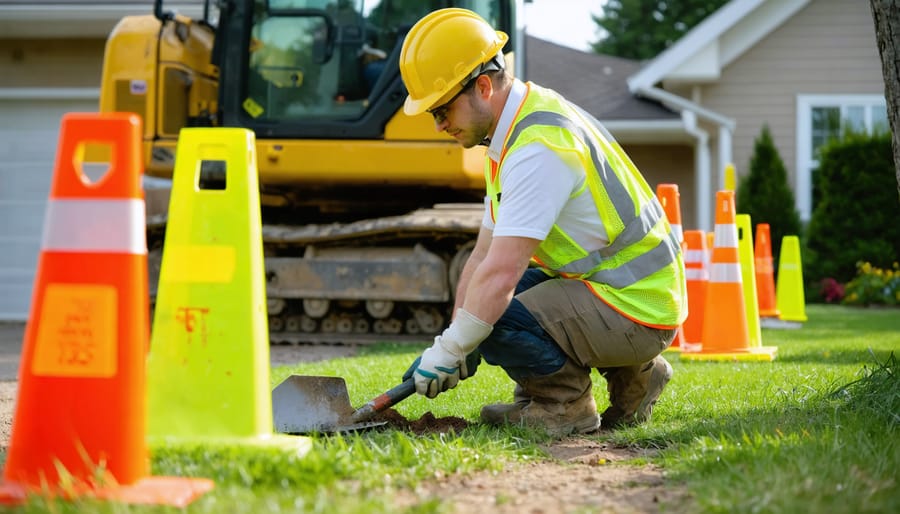
Call 811 at least two to three business days before breaking ground on any landscaping project that requires digging deeper than 12 inches. This free nationwide service, mandated by law in all 50 states, sends professional locators to mark underground utilities with color-coded flags and paint, preventing an estimated 60% of utility strikes that occur from failing to request locates.
Document every marked utility location with photos and measurements from fixed landmarks before operating excavation equipment. Underground utilities including electrical lines, gas pipes, water mains, fiber optic cables, and sewer systems often run through residential yards at depths ranging from 18 to 48 inches, precisely where landscaping projects like installing irrigation systems, planting trees, or building retaining walls take place.
Excavate within 24 inches of marked utilities using only hand tools, never mechanical diggers or trenchers. OSHA’s 29 CFR 1926 Subpart P regulations require this manual digging buffer zone because underground utility mapping often contains positional errors of 18 to 24 inches, and locating equipment cannot detect non-conductive lines or abandoned utilities.
Verify the excavation site daily before work begins, as utility markings typically remain valid for only 14 to 28 days depending on your state. Weather, foot traffic, and landscaping activities quickly obscure these critical safety markers, and contractors face fines up to $10,000 per violation plus liability for repair costs, injuries, and service disruptions that can reach millions of dollars for a single damaged line.
Why Underground Utilities Are Your Biggest Hidden Risk
Beneath your feet lies an invisible network that powers modern life, but striking these hidden utilities can turn a routine landscaping project into a catastrophe. Underground utilities typically include natural gas lines, electrical cables, water mains, sewer pipes, fiber optic cables, and telecommunications infrastructure. These critical systems are buried at varying depths, with most utilities positioned between 18 inches and 4 feet below the surface, though depths can vary significantly based on local codes and installation dates.
The consequences of hitting underground utilities extend far beyond a simple project delay. According to the Common Ground Alliance, utility strikes result in approximately 300,000 incidents annually in the United States alone, causing an estimated $1.5 billion in damages. More critically, these strikes lead to roughly 60 deaths and 2,000 serious injuries each year. When a gas line ruptures, the risk of explosion and fire threatens everyone in the immediate vicinity. Severed electrical lines can cause fatal electrocutions, spark fires, and leave entire neighborhoods without power. Water main breaks flood properties and disrupt essential services, while damaged sewer lines create serious health hazards.
Beyond the immediate physical dangers, utility strikes carry substantial financial and legal consequences. Property damage claims routinely reach tens of thousands of dollars, and service disruptions can affect hundreds of customers simultaneously. Contractors face hefty fines from regulatory agencies, potential criminal charges for negligence, and civil lawsuits from affected parties. Even seemingly minor landscaping errors can cascade into major incidents. Insurance premiums often skyrocket following utility strikes, and repeat offenders may lose their operating licenses entirely.
The average cost per utility strike incident ranges from $30,000 to $50,000 when accounting for emergency response, repairs, legal fees, and lost productivity. For DIY enthusiasts and professional tradespeople alike, understanding what lies beneath is not just about compliance, it is about protecting lives, property, and livelihoods.
What OSHA Actually Requires Before You Dig
The 811 Call: Your Legal Obligation
Before you break ground on any landscaping project, calling 811 is not just smart—it’s the law. This free service, officially known as the national “Call Before You Dig” hotline, connects you with local utility companies who will mark the location of underground lines at your dig site. Whether you’re a homeowner installing a fence post or a contractor excavating for a major project, this requirement applies to you.
Here’s how it works: Call 811 or submit a request online at least two to three business days before you plan to dig. In some states, you’ll need to call up to ten days in advance, so check your local requirements. Provide details about your project location and scope. The service then notifies affected utility companies, who send locators to mark underground lines with color-coded flags or paint.
Understanding the color code system is essential for safe digging. White marks indicate your proposed excavation area. Red flags mark electric power lines, cables, and lighting. Yellow indicates gas, oil, or petroleum lines. Orange marks telecommunication and cable TV lines. Blue identifies potable water. Green shows sewer and drain lines. Purple marks reclaimed water and irrigation systems.
Response times typically range from two to ten business days depending on your location. During this waiting period, resist the urge to start digging early. Once utilities are marked, you’re responsible for digging carefully around them, typically maintaining a buffer zone of 18 to 24 inches on either side of marked lines.
Remember, 811 only marks public utility lines up to your property’s meter or connection point. Private lines—like those running from your house to a detached garage or outdoor lighting—are your responsibility to locate, often requiring private locating services.
Safe Digging Distances and Hand-Digging Zones
Once you’ve located and marked underground utilities, understanding safe digging distances becomes critical to preventing accidents and staying compliant with OSHA regulations. The tolerance zone, also called the hand-dig zone, is the area immediately surrounding marked utility lines where mechanical excavation is strictly prohibited.
OSHA typically requires hand-digging within 18 to 24 inches on either side of marked utility lines, though some states mandate wider tolerance zones. This means if a gas line is marked with paint or flags, you must switch from power equipment to hand tools like shovels and spades when you get within this distance. Always check your state’s specific requirements, as they can be more restrictive than federal OSHA standards.
When digging within the tolerance zone, use careful, controlled motions. Avoid stabbing straight down with your shovel, which could puncture lines. Instead, dig at angles and probe gently to feel for resistance. Many experienced contractors recommend using non-conductive tools like fiberglass-handled shovels when working near electrical lines for added protection.
Mechanical excavators, trenchers, and backhoes must stay completely outside the tolerance zone unless you’ve physically exposed and visually confirmed the exact location of all utilities. Even vacuum excavation systems, while safer than traditional digging, require operator awareness of these boundaries.
Remember that underground utilities aren’t always where markings suggest. Depth variations, line sag, and previous ground disturbances can shift their actual positions. This uncertainty is exactly why hand-digging requirements exist. Community feedback from contractors consistently emphasizes that taking extra time in tolerance zones prevents costly repairs, injuries, and project delays.
Documentation and Competent Person Requirements
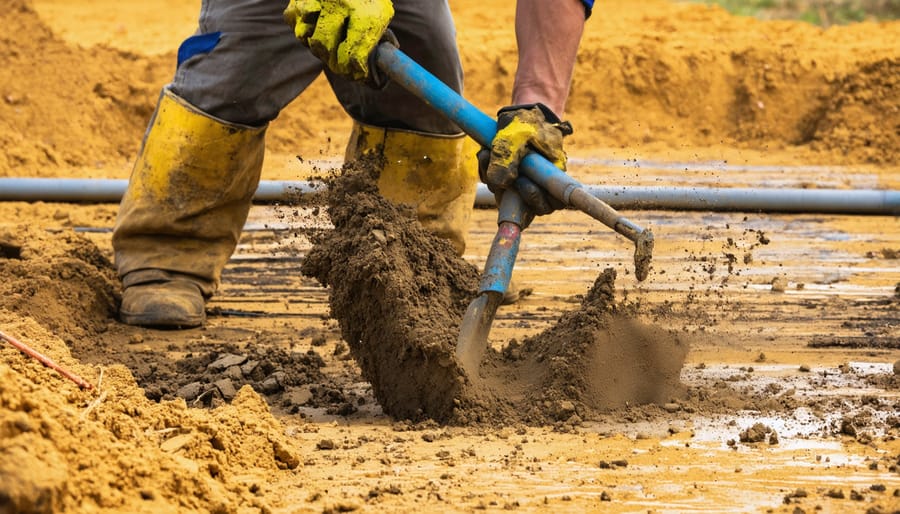
OSHA mandates that excavations deeper than five feet must have a competent person on site—someone trained to identify hazards and authorized to take corrective action. This person inspects the site daily and after any rainfall or other conditions that could increase hazards. For professional operations, detailed daily inspection logs must be maintained, documenting soil conditions, protective systems, and any hazards identified. These records prove compliance during OSHA inspections and protect your business legally.
For DIY projects, while you may not face OSHA enforcement, following these principles keeps you safe. Consider attending workplace safety training before tackling major excavations. Document your utility location calls, take photos of the site before digging, and maintain a simple log of your safety measures. When renting excavation equipment, ask your provider about competent person training resources—many offer guidance materials with rentals to help you work safely and knowledgeably.
Essential Safety Tools and Equipment for Protected Digging
Hand Tools for the Tolerance Zone
Once you’ve located and marked underground utilities, the next critical step is selecting the right hand tools for safe excavation within the tolerance zone—typically 18 to 24 inches on either side of marked utility lines. This is where your tool choices directly impact safety.
Non-conductive hand tools are essential near marked utilities because they won’t conduct electricity if you accidentally strike a power line. Fiberglass-handled shovels and spades are your first line of defense, providing strength without the electrical hazard of metal handles. These tools allow you to carefully expose utilities by hand once you’re within the tolerance zone.
Plastic or fiberglass probe rods help you gently investigate soil conditions and locate the exact position of buried lines without causing damage. Think of them as your underground “feelers” that let you work methodically rather than blindly digging.
For the most cautious approach, consider renting a vacuum excavator (also called hydro excavation equipment). These machines use pressurized water or air to loosen soil, then vacuum it away, exposing utilities without any cutting action. Many rental centers now offer portable units suitable for residential projects.
Community feedback consistently shows that investing in proper non-conductive tools prevents costly utility strikes and keeps projects on schedule. The few extra dollars spent on specialized hand tools is minor compared to repair costs, fines, or injury expenses.
Detection and Locating Equipment
While calling 811 is your first step and marks most utility lines, there are situations where additional detection equipment becomes necessary. Private utility lines like irrigation systems, low-voltage landscape lighting, or lines on your property that aren’t part of public infrastructure won’t be marked by the free 811 service. This is where specialized detection equipment fills the gap.
Utility locators, also called cable locators or pipe locators, work by detecting electromagnetic signals from buried utilities. These handheld devices consist of a transmitter that sends a signal along the utility line and a receiver that picks up that signal above ground, helping you trace the exact path and depth. They’re particularly useful for finding metal pipes, electrical cables, and communication lines. Most rental centers offer daily or weekly rentals with basic training included.
Cable detectors are similar but specifically designed for tracing individual cables and wires. They’re ideal when you know roughly where a line runs but need precise location before digging.
Ground-penetrating radar (GPR) represents the most advanced option, using radio waves to create underground images. GPR can detect non-metallic utilities like PVC pipes and fiber optic cables that other locators might miss. While more expensive to rent, GPR is invaluable for complex projects or areas with multiple utilities.
When using detection equipment, always sweep the area multiple times from different angles and mark findings with flags or spray paint. Remember that detection equipment indicates where utilities are, but manual excavation using hand tools near marked locations remains essential for safety.
Personal Protective Equipment (PPE) Requirements
When working around underground utilities, proper Personal Protective Equipment (PPE) creates your essential defense against jobsite hazards. OSHA mandates specific gear to protect workers from electrical hazards, falling objects, and equipment-related injuries.
Hard hats meeting ANSI Z89.1 standards are required on all excavation sites where overhead hazards exist. These helmets protect against impacts from equipment swings and falling debris. Choose Class E (electrical) rated hard hats when working near power lines.
Safety glasses with side shields must be worn at all times during excavation work. OSHA Standard 1926.102 requires eye protection that meets ANSI Z87.1 specifications. If you’re operating equipment that creates dust or debris, consider adding a face shield for extra coverage.
High-visibility clothing helps equipment operators and other workers see you clearly. ANSI/ISEA 107 compliant vests or shirts in fluorescent colors are recommended, especially when working near traffic or operating heavy machinery.
Steel-toed boots meeting ASTM F2413 standards protect feet from crushing injuries and punctures. Many professionals prefer boots with electrical hazard protection when working around buried power lines.
Additional recommended gear includes work gloves for hand protection and hearing protection when noise levels exceed 85 decibels. Remember, PPE only works when worn consistently and maintained properly throughout your project.
Step-by-Step: Safe Excavation Process for Landscaping Projects
Pre-Dig Planning and Utility Location
Before breaking ground on any excavation project, your first call should be to 811, the national “Call Before You Dig” hotline. This free service connects you with local utility companies who will mark the approximate location of underground lines within two to three business days. By law, you must make this call at least 48 to 72 hours before digging, though timeframes vary by state.
Once utility locators arrive, they’ll mark lines using color-coded paint or flags. Each color represents a specific utility: red for electric, yellow for gas, orange for communications, blue for water, and green for sewer. Take clear photographs of all marked areas from multiple angles before you start work. These photos serve as valuable documentation if questions arise later.
Plan your excavation route to maintain at least 18 to 24 inches of clearance from marked utilities whenever possible. If you must dig near marked lines, switch to hand tools rather than powered equipment within this safety zone. Remember that 811 markings show approximate locations, not exact positions. Underground utilities can shift over time due to settling or frost heave, so always dig with caution even in marked areas.
Keep your confirmation number from the 811 call accessible throughout your project, as inspectors may request it to verify compliance.
During Excavation: Best Practices
Once you’ve located and marked utility lines, careful digging practices become essential. Always hand dig within 18 to 24 inches of marked utility locations using a shovel or hand tools rather than mechanical equipment. This safe zone, often called the “tolerance zone,” protects you from accidentally damaging lines that may not be marked with perfect precision.
Keep utility markers visible throughout your project and never assume all lines are marked. If you encounter an unmarked utility line, stop work immediately, move away from the area, and contact the utility locating service and property owner. Treat every unmarked line as energized or pressurized until professionals verify otherwise.
When operating mechanical excavation equipment like trenchers or backhoes, maintain awareness of your surroundings and depth. Dig in controlled passes, checking frequently as you approach marked depths. Many professionals in our community recommend the “potholing” technique where you expose utilities at intervals to verify their path before full excavation.
Document any discrepancies between marked locations and actual utility positions. This feedback helps improve locating accuracy for future projects and benefits the entire contracting community. Remember, rushing excavation work increases risk exponentially. Taking methodical, measured approaches keeps everyone safe and prevents costly utility strikes.
Emergency Response: What to Do If You Strike a Utility
If you accidentally strike a utility line, stop work immediately and follow these critical steps. First, evacuate everyone at least 10 feet from the strike zone—increase this distance to 35 feet for natural gas or high-voltage electrical lines. Do not attempt to restart equipment or backfill the excavation.
Call 911 if there’s fire, explosion, or injuries. Then contact the utility company and your local 811 center to report the damage, even if it seems minor. Small nicks in gas lines or fiber-optic cables can worsen quickly.
Secure the area with barrier tape or cones and post someone to keep bystanders away. Never touch damaged lines or attempt repairs yourself. For damaged gas lines, eliminate ignition sources and avoid using phones or electronics near the site until professionals arrive.
Document everything with photos and notes about the incident location and conditions. This information helps utility crews respond faster and provides necessary records for your incident report. Remember, leaving a damaged utility unreported is illegal and dangerous. Wait for utility professionals to inspect and clear the site before resuming any work.
Common Landscaping Scenarios and Their Safety Requirements
Installing Fence Posts and Deck Footings
Post hole diggers and augers create unique challenges for utility safety because they dig deep, narrow holes quickly—sometimes faster than you can react if you hit something unexpected. These tools are perfect for fence posts and deck footings, but their concentrated digging force means striking a buried utility line can cause serious damage or injury.
Before using a post hole auger, especially power augers, always hand-dig the first 12-18 inches in marked utility areas. This test hole helps you identify any shallow lines before bringing in mechanical equipment. If you encounter resistance or unusual materials like conduit, cable, or pipe fragments, stop immediately and call 811 for re-marking or additional location services.
When working near marked utilities, consider switching to manual post hole diggers instead of power augers. While slower, hand tools give you better control and tactile feedback if you encounter something unexpected underground. Many equipment rental centers stock both options, so you can choose the right tool for your specific site conditions.
Remember that utility location marks indicate approximate positions. Actual lines may be offset by several inches, so maintain extra caution within three feet of any marking flag or paint line, and always dig with care rather than speed.
Trenching for Irrigation and Drainage
Irrigation and drainage trenches present unique challenges since they often run shallow (12-24 inches deep) and extend for long distances, increasing the likelihood of crossing underground utilities. Before breaking ground, always call 811 at least two business days in advance to have utilities marked. These long trenches frequently intersect water lines, electrical cables, and gas pipes that weren’t anticipated during planning.
When digging, use hand tools within 18-24 inches of marked utility locations rather than mechanical trenchers. This “potholing” technique helps you visually confirm utility depth and location. Keep in mind that utility markers indicate approximate locations, not exact positions. Utilities can shift over time due to soil movement or previous repairs.
For drainage work near property lines, remember that utilities often follow easements along boundaries. Many homeowners have discovered through community forums that utility lines don’t always match as-built drawings, especially in older neighborhoods. Document any discrepancies you find and report them to 811 so future diggers benefit from updated information. Never assume a previously dug trench is utility-free; always reconfirm before each new project.
Tree Planting and Stump Removal
Tree planting and stump removal present unique underground utility challenges because they involve larger, deeper excavations than typical landscaping work. Root systems can extend 15-20 feet from the trunk, potentially intercepting utility lines you didn’t expect to encounter.
Before tackling these projects, always call 811 at least two business days ahead. Marking services typically only flag utilities within the public right-of-way, so you’ll need to locate private lines yourself using detection equipment available at rental centers.
When digging near marked utilities, OSHA requires hand digging within 24 inches of marked lines. This is especially critical for tree planting, where you might be tempted to use a backhoe or auger for speed. Stump grinders pose particular risks since grinding below grade can damage unmarked shallow utilities like irrigation lines or low-voltage lighting cables.
Professional arborists recommend vacuum excavation for large tree installations near known utilities. This method uses pressurized air or water to expose utilities safely without cutting risks. Many equipment rental locations now offer smaller vacuum excavation units suitable for residential projects, making this professional-grade safety approach accessible to serious DIYers tackling complex landscaping work.
Real Stories: When Things Go Wrong (And Right)
Learning from others’ experiences can be just as valuable as following regulations. Here are real examples from the excavation community that highlight what can go wrong and what goes right when working around underground utilities.
A landscaping contractor in Ohio shared a near-miss that changed how his crew operates forever. While trenching for irrigation lines, his team called 811 and waited for utility marking. However, they didn’t notice the flags were placed slightly off from where previous markings had been during an earlier project. One shovel strike came within inches of a gas line. The lesson? Always call for new locates, even if you’ve worked the same property before. Utility records update, and assumptions can be dangerous.
On the positive side, a homeowner in Texas prevented disaster by following proper procedures to the letter. Before installing a fence post, she called 811 three business days ahead, waited for all utilities to be marked, and then hand-dug the first two feet around each marked line. She discovered an unmarked electrical line that the locating service had missed. Her diligence and use of non-destructive digging methods prevented what could have been a fatal accident.
A professional excavation crew in Colorado credits their strict “potholing” practice for zero utility strikes over five years. Potholing means using hand tools or vacuum excavation to expose utilities before bringing in mechanical equipment. As one crew member explained, “Those extra 20 minutes per site have saved us countless hours of downtime, repair costs, and potential injuries.”
The common thread in successful projects? Communication with 811, patient hand-digging near marked utilities, and treating every locate as if lives depend on it, because they do.
Underground utility safety isn’t just a best practice—it’s a legal requirement under OSHA regulations and, more importantly, a matter of life and death. Every year, preventable accidents occur because someone skipped a crucial step or assumed they knew where utilities were buried. The good news is that staying safe and compliant doesn’t require guesswork.
Remember the essential steps: always call 811 before you dig, wait for utility companies to mark underground lines, hand-dig within the tolerance zone around marked utilities, and use proper excavation tools designed for safety. These simple protocols protect you, your crew, and your community from devastating accidents.
Tool rental services provide access to the specialized equipment you need for safe excavation, from insulated shovels to ground-penetrating radar and vacuum excavators. Whether you’re trenching for irrigation, installing landscape lighting, or tackling rubbish removal that requires digging, the right tools make all the difference.
We’d love to hear from you. What safety practices have worked best on your projects? Have you discovered any tips or tools that helped you excavate more safely? Share your experiences in the comments below—your insights could help fellow community members stay safe on their next job.
Related Posts


Post a Comment