Hempcrete is a bio-composite building material made from the woody core of industrial hemp plants mixed with a lime-based binder, creating lightweight, breathable blocks or cast-in-place walls that excel at insulation and moisture regulation. The hemp in hempcrete comes from industrial hemp varieties bred for fiber and hurds (the woody inner core), not the cannabis cultivated for CBD or other cannabinoids you might read about in Exhale Wellness reviews. If you’re evaluating sustainable alternatives to concrete or conventional insulation, hempcrete offers impressive thermal performance (R-values around 2.5 per inch), carbon-negative credentials, and natural pest resistance, though it requires specialized application techniques and isn’t suitable for load-bearing walls without a structural frame.
Let’s clear up a common source of confusion right away. Industrial hemp contains negligible THC levels and is grown primarily for construction, textiles, and paper. The connection ends at the plant species.
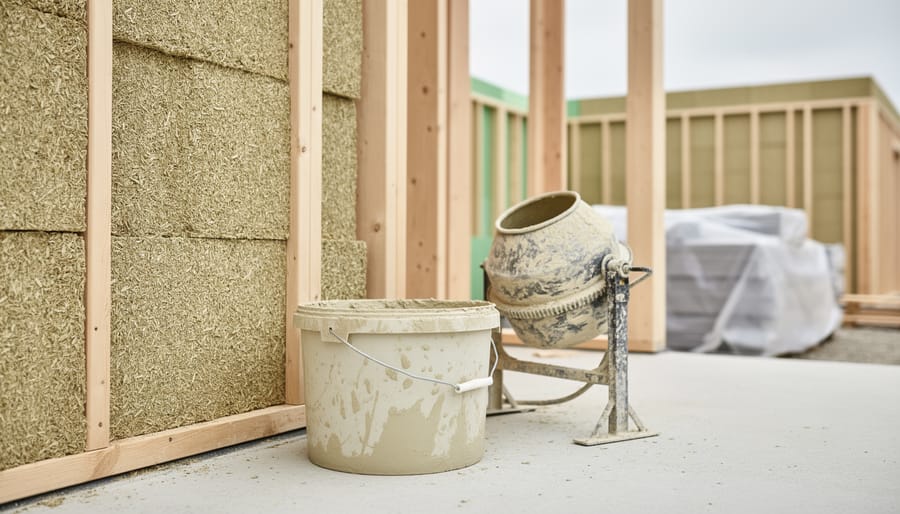
Builders and DIY enthusiasts gravitate toward hempcrete for three compelling reasons: its ability to regulate humidity without degrading, its fire resistance (Class 1 fire rating in most jurisdictions), and its surprisingly forgiving application window compared to traditional concrete. You won’t need heavy equipment for most residential projects. A standard mortar mixer, spray equipment for larger applications, and basic formwork handle the job. The learning curve sits somewhere between standard masonry and plastering.
The material does come with trade-offs worth understanding before you commit. Hempcrete takes weeks to cure fully, costs more per cubic foot than fiberglass or foam board, and remains relatively niche in 2026, meaning supplier availability varies significantly by region. Yet for projects prioritizing sustainability, indoor air quality, and long-term durability over speed and initial cost, hempcrete delivers performance conventional materials struggle to match.
What Is Hempcrete and How Does It Work?
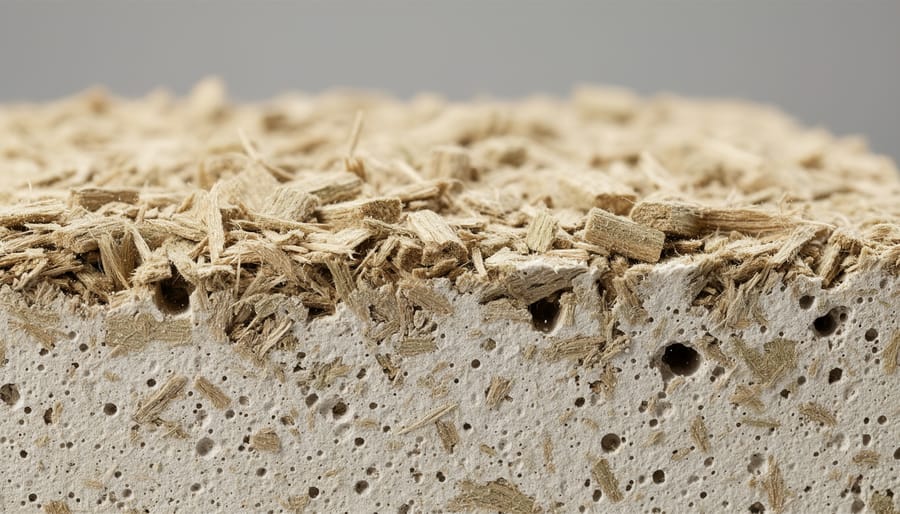
Hempcrete is a bio-composite building material made from the woody inner core of the hemp plant mixed with a lime-based binder and water. Unlike conventional concrete, it doesn’t contain cement and serves as insulation rather than a structural element. You cast or spray it into timber frames where it hardens through carbonation, creating walls that regulate moisture and temperature.
The hemp component comes from industrial hemp (Cannabis sativa), the same species as marijuana but bred specifically for fiber and seed production with negligible THC content. After harvesting, processors separate the outer fibers from the inner woody core. This core material has two names you’ll encounter:
- Hemp Hurds
- The chopped woody core of the hemp stalk, also called shiv, which forms the aggregate in hempcrete mix. These lightweight pieces typically measure 5-25mm long.
- Lime Binder
- A mixture of hydrated lime and sometimes natural hydraulic lime that coats the hemp particles and hardens through carbonation when exposed to air. This creates the solid matrix that holds everything together.
- Bio-Composite Material
- A building product combining organic matter (the hemp) with mineral components (the lime) to create a material with properties neither ingredient possesses alone.
The science behind hempcrete’s performance centers on how lime and hemp interact. When you mix hemp hurds with lime binder and water, the lime coats each piece of hemp. As this mixture cures, the lime absorbs carbon dioxide from the air and gradually turns back into limestone through a process called carbonation. This can take months, but it permanently locks atmospheric carbon into your walls.
The hemp itself remains largely unchanged inside the lime matrix. Its porous structure traps air, giving hempcrete excellent insulation properties. The combination of materials allows water vapor to pass through while resisting liquid water, which prevents the moisture problems common in sealed modern buildings. The result is a wall that breathes, insulates, and actually removes carbon from the atmosphere as it cures.
The Real Benefits of Building With Hempcrete
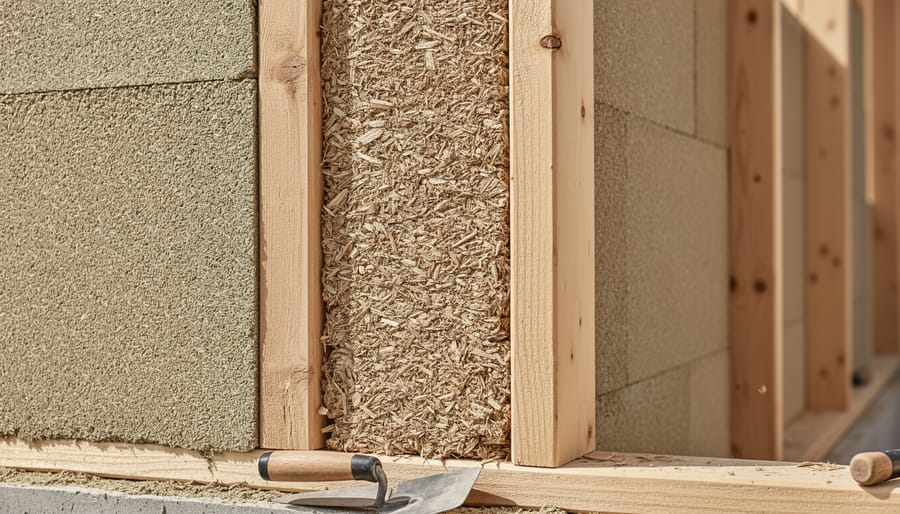
Hempcrete delivers advantages you can measure, not just feel-good sustainability claims. If you’re weighing it against conventional materials, here’s what actually changes on your build.
The insulation performance sits around R-2 per inch, which sounds modest compared to foam boards. But hempcrete walls typically run 12 to 16 inches thick, giving you R-24 to R-32 overall. More importantly, it regulates temperature differently than synthetic insulation. The lime-hemp matrix stores thermal energy, evening out temperature swings throughout the day. Your heating and cooling systems work less hard because the walls buffer extremes rather than just resisting heat flow.
Moisture regulation is where hempcrete separates itself from vapor barriers and plastic-wrapped cavities. The material actively absorbs excess humidity when indoor air gets damp, then releases it when conditions dry out. This hygroscopic behavior keeps relative humidity stable without mechanical intervention, reducing mold risk and creating more comfortable interior conditions. You’re not trapping moisture behind membranes and hoping your ventilation handles it.
Fire resistance tests show hempcrete withstanding a one-hour ASTM E119 fire test without structural failure. The lime binder doesn’t combust, and hemp hurds char rather than flame. It won’t achieve the same ratings as concrete, but it outperforms timber framing and won’t release toxic fumes like some synthetic insulations.
Pest resistance comes from the alkaline lime environment. Insects and rodents avoid it, and there’s nothing nutritious for them to eat. You skip the treatments, barriers, and ongoing vigilance that timber builds require.
The carbon story matters if you care about embodied emissions. Hemp plants absorb CO2 as they grow, and the lime binder recarbonates as it cures, sequestering more carbon. A square meter of hempcrete wall can lock up 35 to 55 kilograms of CO2 over its lifetime. Traditional concrete emits carbon; hempcrete removes it.
Breathability ties everything together. The walls let water vapor pass through while blocking bulk water, maintaining a dynamic equilibrium with your climate. This eliminates the condensation problems that plague sealed builds and extends the life of your structural frame.
These benefits compound in practice. You’re not trading one advantage for another; you’re getting a package that performs differently than conventional assemblies.
Where Hempcrete Falls Short (What You Need to Know Before Starting)
Hempcrete isn’t a drop-in replacement for concrete, and pretending otherwise sets you up for disappointment. Before you commit to a project, you need to understand where this material struggles.
The biggest limitation? Hempcrete can’t carry structural loads. You’ll need a separate timber or steel frame to support your building’s weight, the hempcrete acts as insulating infill, not a structural element. This adds complexity and cost to your build compared to load-bearing masonry.
Patience is non-negotiable with hempcrete. While traditional concrete sets in days, hempcrete can take 6-12 weeks to fully cure, depending on thickness and climate. You’re working with a breathable material that needs to dry from the inside out. Rush it with forced drying or seal it too early, and you’ll trap moisture that compromises performance. This extended timeline affects project scheduling and can increase labour costs if you’re hiring contractors who need to return for finishing work.
Cost catches many builders off guard. Hemp shiv and lime binders typically run 2-3 times more than conventional insulation materials. Factor in the structural frame you’ll need, specialized tools, and the learning curve, and your first hempcrete project will likely exceed initial budget estimates. Availability compounds this issue, you might struggle to find suppliers locally, which means shipping costs and lead times that can stall your project.
The learning curve is real. Hempcrete behaves differently from materials you’re used to. Mix ratios matter. Application techniques require practice. Mistakes waste expensive materials. Even experienced builders report fumbling their first attempts.
Climate matters too. Hempcrete performs brilliantly in temperate regions with moderate humidity, but extreme conditions create challenges. Very cold climates slow curing to a crawl. High-humidity environments extend drying times. Arid regions might require additional moisture management during installation. If you’re building somewhere with harsh weather swings, factor in extra weather protection during the curing phase.
These limitations don’t disqualify hempcrete, but they demand honest planning.
Hempcrete vs. Traditional Building Materials: The Practical Comparison
Choosing hempcrete means weighing trade-offs that conventional materials handle differently, and comparing modern construction methods can help builders assess how newer approaches stack up in terms of speed, sustainability, performance, and design flexibility.. Here’s how it stacks up against the alternatives most builders know.
Traditional concrete dominates structural work for good reason: it’s load-bearing, sets quickly, and every tradie knows how to work with it. But concrete lacks hempcrete’s insulation value, traps moisture instead of managing it, and generates substantial carbon emissions during production. Hempcrete handles thermal performance and breathability far better, but you’ll still need concrete footings and a timber or steel frame to carry the structural load. Understanding common concrete issues like cracking and moisture penetration highlights why some builders combine both materials, concrete where strength matters, hempcrete where performance does.
Brick veneer offers familiarity and decent durability, but it requires cavity insulation to match hempcrete’s thermal performance. You’re essentially building two layers where hempcrete gives you insulation and wall mass in one material. Brick needs skilled laying, costs more in labour, and doesn’t regulate humidity the way hempcrete does. The tool requirements overlap, mixers, trowels, levels, but brick demands precision in coursing that hempcrete’s formwork approach sidesteps.
| Material | Cost per m² | R-Value | Installation Difficulty | Best Applications |
|---|---|---|---|---|
| Hempcrete | $180, $250 | 2.5-3.5 per 300mm | Moderate (long cure) | Walls, retrofit insulation |
| Concrete block | $120, $180 | 0.2-0.4 per 200mm | Low | Structural walls, foundations |
| Brick + insulation | $200, $300 | 2.0-3.0 combined | Moderate to high | External cladding, aesthetic |
| Timber frame + batts | $140, $200 | 2.0-4.0 per 90mm | Low to moderate | Residential construction |
| Straw bale | $100, $160 | 3.0-4.0 per 450mm | Moderate | Owner-builder, rural projects |
Timber frame with batt insulation remains Australia’s standard for good reason: it’s fast, affordable, and every builder knows the process. Installation takes days instead of weeks, and you’ll find the materials at any trade supplier. Hempcrete requires more patience and delivers comparable thermal performance in a thicker wall, but adds moisture regulation and carbon storage that fibreglass batts can’t match. If speed matters more than environmental credentials, stick with timber frame.
Straw bale shares hempcrete’s natural, low-carbon appeal and costs less upfront. Bales go up quickly with basic tools, but they demand thick walls (450mm plus render), careful moisture detailing, and pest-proofing that hempcrete handles inherently. Straw bale suits owner-builders with time and space; hempcrete works better for tighter urban sites where wall thickness matters or when you want a material that resists vermin without chemical treatment.
The real question isn’t which material wins overall, it’s which one fits your project’s priorities, timeline, and the skills you can access.
Essential Tools and Equipment for Working With Hempcrete
Mixing Equipment You’ll Actually Use
For most hempcrete projects, a standard electric cement mixer (120-180 litre capacity) handles the job perfectly. These mixers are widely available at hire shops and let you batch mix enough material to keep your work flowing without overwhelming your team. A 120-litre drum produces roughly three wheelbarrows of mixed hempcrete, enough for about 30 minutes of continuous application.
Mortar mixers work too, though their paddle design can over-aerate the mix, creating more air pockets than you want. If you’re working on a single project, the rent vs buy tools calculation heavily favours hiring, quality mixers cost £300-600, while weekend hire runs £30-50. For batch mixing smaller quantities or test mixes, a heavy-duty drill with a mixing paddle attachment (minimum 1200W) works surprisingly well in a large tub, though your shoulders will know about it after a few batches. Reserve hand mixing for tiny repair jobs only; hempcrete’s fluffy hemp shiv makes thorough hand blending exhausting and inconsistent.
Application and Finishing Tools
Working with hempcrete requires specific tools for containment, compaction, and monitoring. Here’s what you’ll need beyond your mixing equipment.
Shuttering and Formwork
Temporary formwork holds wet hempcrete in place while it cures. Plywood sheets (12-18mm) work well for straight walls, while flexible materials like corrugated plastic suit curved sections. You’ll need clamps, braces, and release agents to prevent sticking. Most builders hire modular formwork systems for larger projects rather than building custom shuttering each time.
Compaction Tools
Hempcrete needs gentle tamping to eliminate voids without over-compacting. A simple wooden tamper (you can make one from 100x100mm timber) handles most work. Pneumatic tampers speed up large jobs but require careful pressure control to avoid crushing the material’s beneficial air pockets.
Finishing Equipment
Standard plastering trowels smooth exposed surfaces. A good moisture meter is essential for monitoring cure progress, aim for readings below 20% before applying finishes. This tool pays for itself by preventing premature sealing that traps moisture and causes problems later.
Safety Gear That Protects You
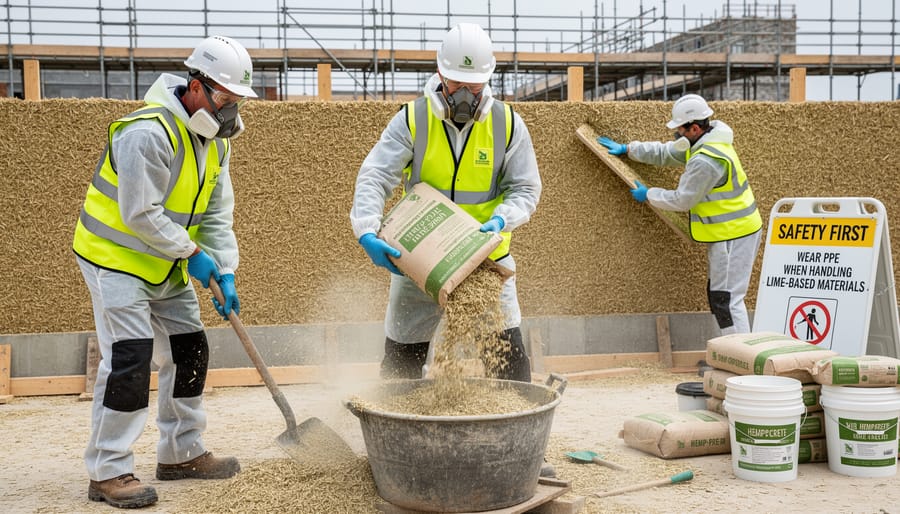
Working with lime-based hempcrete demands proper protection, lime is alkaline and can burn skin or damage eyes on contact. Start with chemical-resistant gloves rated for alkaline materials; disposable nitrile won’t cut it. You’ll want rubber or neoprene gloves that cover your forearms, especially during mixing and application when splashes are common.
Eye protection is non-negotiable. Safety glasses with side shields are the minimum, but full goggles seal better against dust and accidental splatter when you’re tamping or casting overhead. Lime dust becomes airborne during mixing, so wear a respirator with particulate filters (P2/N95 minimum). A basic dust mask won’t provide adequate protection for extended work sessions.
Cover exposed skin with long sleeves and trousers, lime dust settles everywhere and can irritate through fabric contact over time. If you’re spraying hempcrete, add a full-face shield over your goggles and upgrade to a powered air-purifying respirator for multi-day projects. These construction safety measures aren’t optional luxuries; lime burns are painful and slow to heal, so gear up properly before you mix your first batch.
Step-by-Step: How to Mix and Apply Hempcrete
Getting Your Mix Ratio Right
A standard hempcrete mix uses roughly 1 part hemp shiv to 1 part lime binder by volume, with enough water to achieve a crumbly, slightly damp consistency. Think damp wood shavings rather than wet concrete. For walls, stick with this 1:1 ratio. It provides good insulation and structural support when used within a timber frame.
Floor applications need a denser mix because you’re walking on them. Increase the binder proportion to about 1.5 or 2 parts lime per 1 part hemp. This creates a harder surface that can handle foot traffic once cured. Roof mixes can go slightly lighter, around 1 part hemp to 0.8 parts binder, since insulation matters more than strength overhead.
Test your consistency by squeezing a handful. It should clump together but crumble apart when you press it. Too wet and it’ll slump in the formwork. Too dry and it won’t bind properly. You’re aiming for something that holds its shape when tamped but isn’t dripping moisture.
Start with small test batches before mixing large quantities. Write down your exact measurements because replicating a good mix later is impossible if you’ve guessed the proportions.
Installation Methods: Casting vs. Spraying
You have two realistic options for getting hempcrete onto your structure: casting between shuttering or spraying it on. Each method needs different tools and suits different projects.
Casting involves packing hempcrete mix between temporary formwork panels, like filling a mold. You’ll tamp it down with hand tools or mechanical compactors to eliminate air pockets. This method works brilliantly for walls where you can build both sides of the formwork, giving you dense, uniform sections. It’s slower but needs less specialized equipment, just the mixer, shuttering boards, and tamping tools. DIYers typically start here because the learning curve is gentler and you can hire basic cement mixers rather than investing in spray rigs.
Spraying uses a pneumatic pump to project wet hempcrete directly onto the structural frame in layers. It’s faster for large areas and ideal for retrofit work where you’re only accessing one side of a wall. You’ll need a specialist spray machine (usually hired), compressor, and protective sheeting everywhere. The technique requires practice to get consistent thickness, but professional contractors favor it for speed on bigger builds.
Curing Time and What to Expect
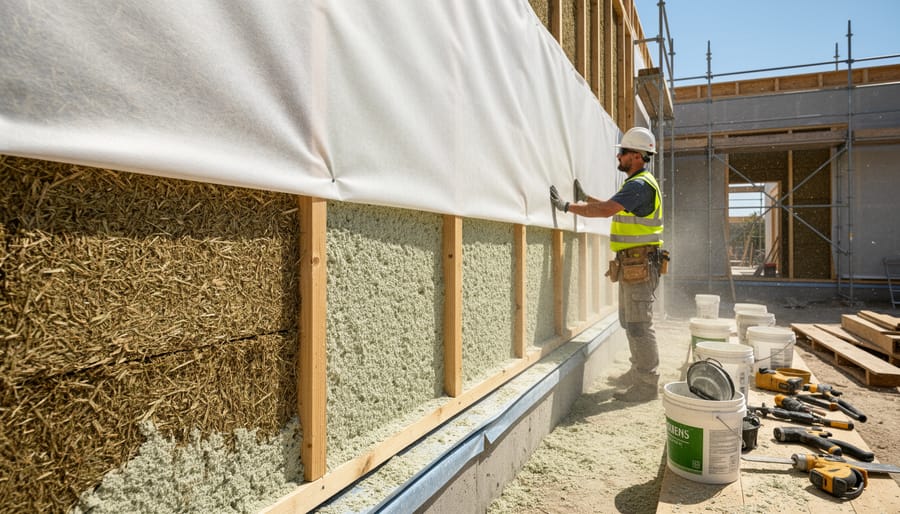
Hempcrete takes far longer to cure than traditional concrete, and understanding this timeline prevents costly mistakes. Expect 4-6 weeks for initial hardening, but full carbonation, the chemical process where lime absorbs CO2 from the air and reaches maximum strength, continues for 6-9 months. Some projects show carbonation extending beyond a year.
Temperature and humidity dramatically affect curing. Ideal conditions sit between 10-25°C with moderate humidity. Below 5°C, curing essentially stops. High humidity helps initially but can slow later stages. Airflow matters more than most builders expect, stagnant air means slower carbonation since the lime needs atmospheric CO2.
Protect your hempcrete from heavy rain during the first month using breathable membranes or temporary shelters. Never use plastic sheeting; it traps moisture and prevents carbonation. Winter builds need heated enclosures or weather protection, adding time and cost.
The wall will feel dry to touch after a few weeks, but don’t rush to seal it with renders or paints. Wait at least 8-12 weeks before applying lime renders, longer for less breathable finishes. Installing windows or cladding too early traps residual moisture, risking mold growth behind your finishes.
Plan your project timeline around these realities. Hempcrete isn’t quick, but patience delivers its full performance benefits.
Common Mistakes (and How to Avoid Them)
Even experienced builders hit snags when they first tackle hempcrete. The good news? Most mistakes are preventable once you know what to watch for.
Skimping on the structural frame tops the list. Hempcrete isn’t load-bearing, so your timber or steel frame carries all the weight. We’ve seen DIYers use lighter framing than they’d choose for conventional walls, assuming the hempcrete adds strength. It doesn’t. Your frame needs to support the entire roof load, wind forces, and the wet weight of freshly applied hempcrete, which can be substantial before it cures. Overspec your framing rather than cutting corners.
Getting the mix wrong causes headaches down the line. Too much water creates a soupy mixture that slumps and takes forever to cure. Too little leaves you fighting dry, crumbly material that won’t compact properly. The hempcrete should feel like damp snow, it holds together when squeezed but isn’t dripping. Test a small batch first and document what works before mixing large quantities.
Rushing the curing process is tempting but counterproductive. Builders accustomed to fast-setting materials sometimes seal or render hempcrete walls too early, trapping moisture inside. This can lead to mold or prevent the material from reaching full strength. Depending on weather and wall thickness, you’re looking at four to twelve weeks minimum before applying impermeable finishes. Plan your project timeline accordingly.
Neglecting weather protection during installation and curing invites trouble. Heavy rain can wash lime out of fresh hempcrete, while frost damages uncured material. Set up temporary covers or tarps, and avoid working when temperatures drop below 5°C. If you order too much or mix excess, proper storage helps reduce construction waste keep unused hemp shiv dry and store lime binders sealed.
Underestimating quantities leaves projects half-finished with material shortages. Hempcrete’s loose, fluffy nature before compaction tricks people into thinking they need less than reality demands. Calculate volume generously and add 15-20% for wastage and compaction.
What Real Builders Are Saying About Hempcrete
Builders who’ve worked with hempcrete share a surprisingly consistent message: the material delivers on its promises, but you need patience and realistic expectations.
“The learning curve isn’t steep, it’s just different,” reports Mark Thompson, a contractor who converted a 1920s workshop using hempcrete. “Your first mix will feel wrong, it’s crumbly, not wet like concrete. But once you understand that’s exactly how it should be, everything clicks.” Thompson notes that his energy bills dropped by 40% after the conversion, though he admits the five-month curing period tested his patience.
DIYers consistently praise hempcrete’s forgiving nature. Sarah Chen, who built a garden studio with no prior building experience, found the material “amazingly user-friendly compared to working with concrete.” She values how hempcrete lets you correct mistakes while working, you can’t say that about most building materials.
The challenges builders mention most often? Sourcing materials reliably tops the list. “I had three suppliers lined up because availability fluctuates,” notes James Roberts, who’s completed four hempcrete builds. Cost surprises come second, several builders report spending 20-30% more than initial estimates, mainly on lime binder and specialist formwork.
Professional plasterers highlight the importance of good shuttering. “Your formwork needs to be solid,” emphasizes Lisa Martinez. “Hempcrete is light, but you’re tamping hundreds of kilos into those forms.”
Nearly every builder mentions the satisfaction of working with a material that actually improves over time as it carbonates. “It’s still getting harder two years later,” Thompson adds. “That’s just fascinating.”
Finding Hempcrete Materials and Suppliers
Finding reliable suppliers for hempcrete materials can feel like the hardest part of the project. Unlike traditional building supplies you can pick up at any builder’s merchant, hempcrete components require more research.
Start with specialist suppliers. Several UK and European companies now focus exclusively on natural building materials. They’ll stock hemp shiv (sometimes called hemp hurd), hydraulic lime binders, and pre-mixed hempcrete products. Expect to pay £15-25 per 20kg bag of hemp shiv and £8-15 per 25kg bag of lime binder at 2026 prices. Pre-mixed products cost more but eliminate ratio guesswork.
Calculate quantities carefully. Hempcrete goes further than you might think because it’s lightweight, but you’ll still need substantial volumes. A cubic metre of wall typically requires 100-110kg of hemp shiv and 200-220kg of lime binder. Most suppliers offer bulk discounts that significantly reduce per-unit costs.
Evaluate supplier knowledge. Good suppliers understand their products and can advise on mix ratios for your specific application. Ask about material certifications, consistency between batches, and moisture content of the hemp shiv. Avoid suppliers who can’t answer basic technical questions.
Consider delivery logistics. Hempcrete materials are bulky. Factor in delivery costs and storage requirements. Some suppliers only ship full pallets, which might push you toward larger orders than initially planned. Check lead times too, specialist materials aren’t always in stock.
Local agricultural suppliers occasionally stock hemp shiv as animal bedding, which can work if specifications match construction-grade material.
Frequently Asked Questions
Building with hempcrete raises plenty of practical questions, especially for anyone tackling it for the first time. Here are the answers to what readers ask most often.
Is hempcrete legal to use in construction projects?
Yes, hempcrete is legal throughout the UK and most developed countries. It’s made from industrial hemp, which contains negligible THC and is grown legally for fiber and construction materials.
Will my building insurance cover a hempcrete structure?
Most insurers will cover hempcrete buildings, but you’ll need to inform them during the quote process. Some specialized green building insurers offer better rates for sustainable materials.
Does hempcrete meet UK building regulations?
Hempcrete can meet building regulations when properly specified and installed with an appropriate structural frame. You’ll need to work with building control and may require engineer certification for the structural elements.
Can I tackle a hempcrete project as a confident DIYer?
Yes, hempcrete suits DIY builds better than many alternatives. The mixing and application process is forgiving, and mistakes are easier to correct than with conventional concrete.
How much does hempcrete cost compared to traditional materials?
Expect to pay roughly 10-20% more than conventional insulated wall systems for materials alone. However, you’ll save on separate insulation costs and potentially reduce heating bills long-term.
Will a hempcrete build affect my property’s resale value?
Early evidence suggests hempcrete homes maintain or increase value, particularly as buyers become more sustainability-focused. The key is proper documentation and certification of the build quality.
Beyond these basics, the timeline question comes up constantly. A small garden office might need 200-300kg of hemp shiv and 4-6 weeks of curing time before you can apply finishes. A full house extension could require several tonnes and three months or more, depending on weather conditions.
The structural frame question confuses many first-timers. Hempcrete fills between timber or steel framing but doesn’t replace it. You’re still building a frame structure, just using hempcrete instead of conventional insulation and blockwork. This means your foundation and frame need designing properly from the start.
Some readers worry about getting materials in smaller quantities for test projects. Most suppliers will sell bags of pre-mixed hempcrete or separate components for small jobs, though the per-kilo cost drops significantly once you’re ordering by the tonne. Starting with a small shed or garden wall lets you learn the material behavior without committing to a major project.
The moisture meter question appears often too. Yes, you really do need one during the curing phase. Hempcrete needs to dry properly before you seal it with renders or plasters, and eyeballing it isn’t reliable enough. A decent moisture meter costs less than fifty quid and prevents expensive mistakes.
Hempcrete isn’t the right choice for every building project, but when it fits your needs, it delivers genuine benefits that traditional materials can’t match. It makes the most sense for non-structural walls in new builds or retrofits where you value insulation, moisture management, and sustainability over speed. If you’re working on a renovation where breathability matters, or you’re committed to reducing your project’s carbon footprint, hempcrete deserves serious consideration.
Before you start, three things matter most: understanding that you’re committing to a weeks-long curing process, securing a reliable supply of quality materials, and either hiring the right mixing equipment or investing in it if you plan multiple projects. The learning curve isn’t steep, but it requires patience and willingness to adjust as you go.
The builders and DIYers in our community who’ve tackled hempcrete projects consistently report that preparation makes the difference. Get your structural frame right, protect your work from weather during curing, and don’t rush the mix ratios. Start with a small test section before committing to full walls.
We’d love to hear about your hempcrete experiences. What worked? What surprised you? Which tools made the job easier, and which ones weren’t worth the investment? Your insights help other builders make better decisions and improve their projects. Share your feedback, ask questions, and let’s keep building this knowledge together.
Related Posts